2 hr 30 min
Djerba Explorer: Crocodile Park & Lalla Hadria Museum
Meet 400 Nile crocodiles and explore 1,000+ art pieces at this family adventure with hotel transfers
Reserve
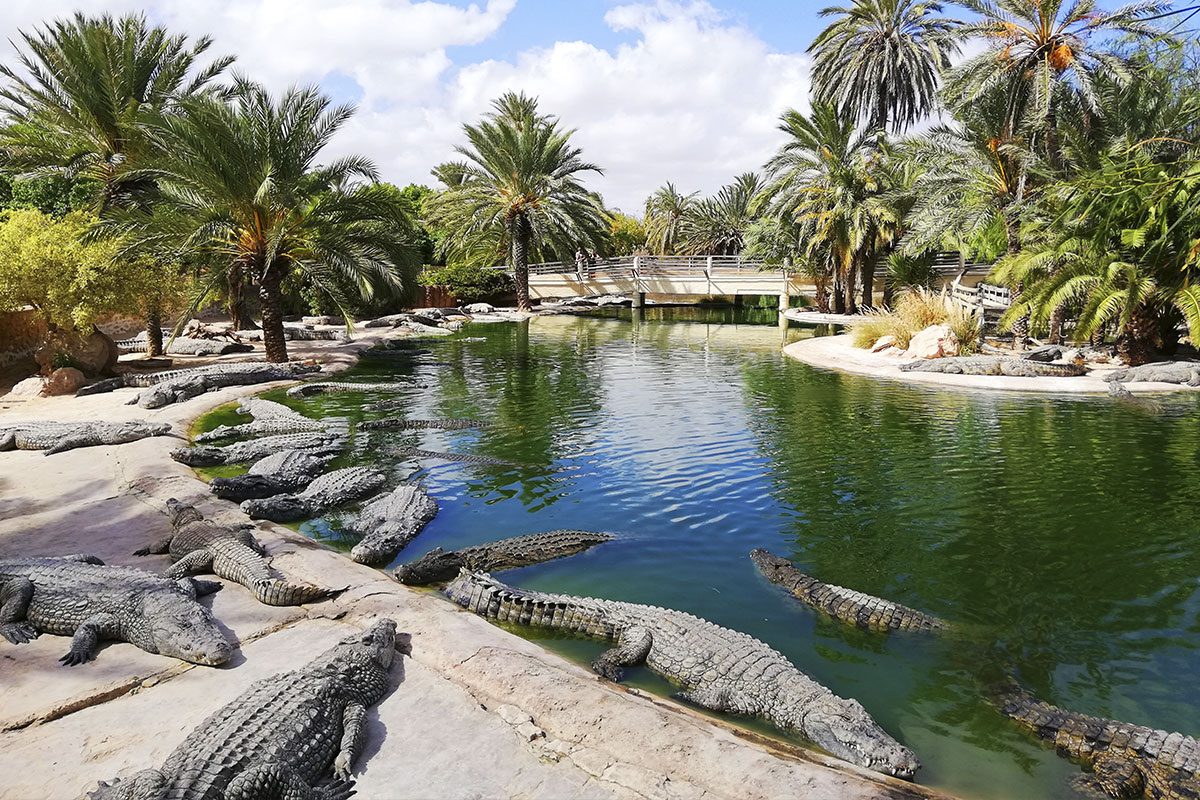
Four hundred Nile crocodiles in coastal habitat, daily feeding rituals at dusk
Hand-picked by our editors — only the best 3 wildlife experiences from 18 reviewed across southern Tunisia.
Verified partners for Djerba Crocodile Farm tours, free cancellation where available, and instant confirmation on every booking.
2 hr 30 min
Meet 400 Nile crocodiles and explore 1,000+ art pieces at this family adventure with hotel transfers
Reserve
3 hr
Encounter 400+ Nile crocodiles, explore Islamic art collections, and discover traditional Tunisian heritage
Reserve
3 hr
Discover Tunisian heritage, local crafts, and 400 Nile crocodiles in one unforgettable family outing
ReservePrices from verified partners. Availability updates in real time at checkout. Free cancellation policies apply where shown.
The landmarks, rooms, and views travelers on Djerba Crocodile Farm tours remember — all visible on a single visit.
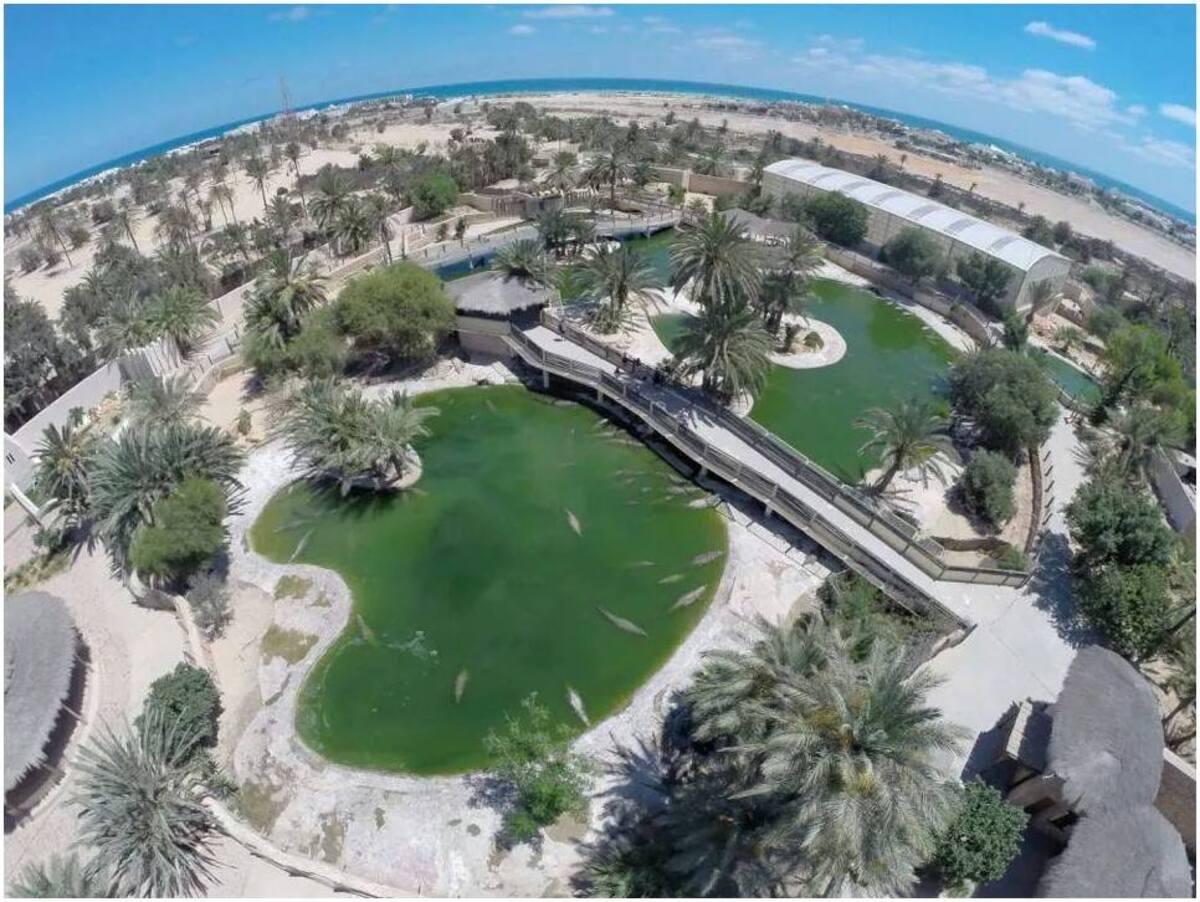
This massive structure houses hundreds of crocodiles in climate-controlled pools mimicking their natural environment.
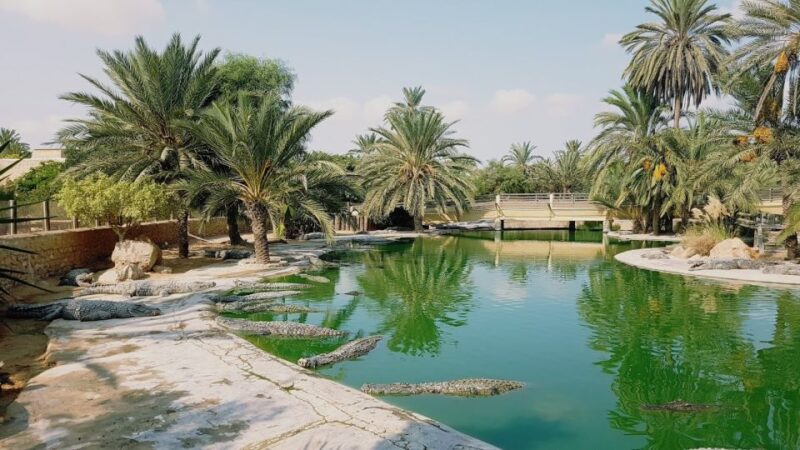
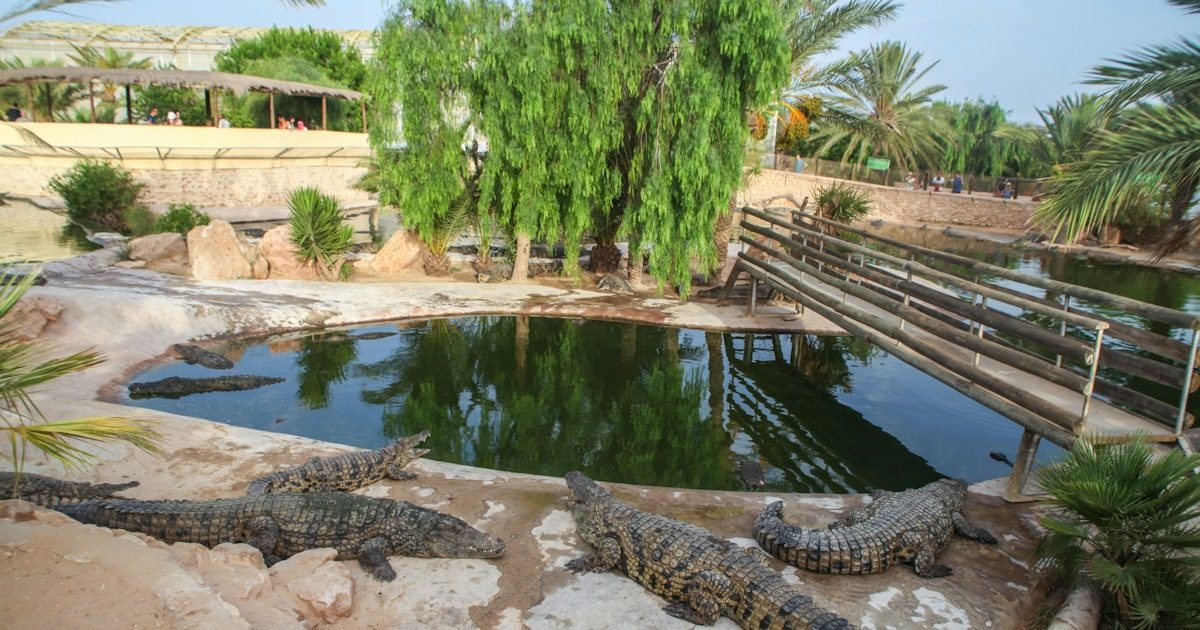
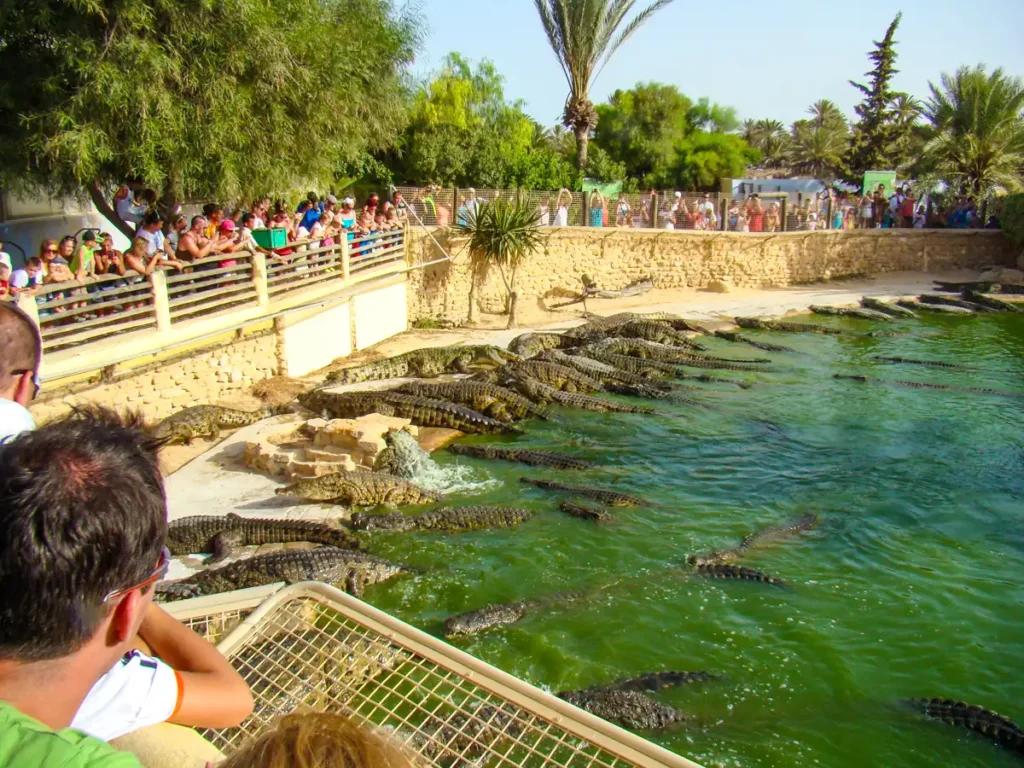
Observe nearly 400 Nile crocodiles up close from secure viewing platforms that allow for excellent photos.
Explore a vast collection of Arab-Muslim art and artifacts featuring intricately decorated galleries.
Step back in time to see traditional Djerban crafts, straw weaving, and historical oil mills in action.
The highlight of the park where you can watch the reptiles gather for their scheduled mealtime daily at 17:00.
Located right next to the park, this historic lighthouse offers a striking backdrop for photos before you enter the park.
Every Djerba Crocodile Farm tour side-by-side — duration, what's included, how you redeem.
| Experience | Duration | Rating | Transfers | Pickup | Guide | Free cancel. | Price | |
|---|---|---|---|---|---|---|---|---|
|
Standard Entry Most popular
Djerba Explorer: Crocodile Park & Lalla Hadria Museum
|
2 hr 30 min | ★ 4.9 | ✓ | ✓ | — | ✓ | €24 | Book → |
|
Standard Entry
Djerba Explore Park: Crocodile Farm & Cultural Museums Tour
|
3 hr | ★ 4.7 | ✓ | ✓ | ✓ | ✓ | €24 | Book → |
|
Standard Entry
Djerba Explore Park & Crocodile Farm Tour
|
3 hr | ★ 4.9 | ✓ | ✓ | — | ✓ | €24 | Book → |
All prices from verified partners. Availability and exact terms confirmed at checkout.
These sites serve different interests, with the djerba crocodile farm offering a vibrant nature experience while the museum provides deep insight into local traditions. Many travelers secure djerba crocodile farm tickets to see the reptiles, whereas others prefer the cultural narrative found at the museum.
| Feature | Top pick Djerba Explore Park | Guellala Museum |
|---|---|---|
Primary focus |
Reptile conservation and nature | Djerban heritage and ethnography |
Best for |
Families and wildlife enthusiasts | History and culture lovers |
Time required |
2–3 hours | 1–2 hours |
Educational value |
High biological and environmental insight | High historical and social context |
Interactive elements |
Crocodile feeding observations | Life-sized cultural dioramas |
| See tickets → |
Verdict: If you prioritize an active wildlife encounter, book your djerba crocodile farm tour, but choose the museum if you seek a quieter exploration of regional customs and island landmarks.
Choose your ticket, select your date, and reserve in under two minutes. Secure checkout handled by our verified partner.
Instant confirmation by email, with a mobile voucher you can save offline. No printing, no queuing at a collection desk.
Arrive at the entrance, show your voucher on your phone, and walk in. Most tickets include priority or skip-the-line access.
Practical details for Djerba Crocodile Farm tickets straight from our verified partners — hours, access, rules, and how to get there.
Route touristique de Midoun, 4116 Midoun
Look for the main Djerba Explore Park sign at the Taguermess lighthouse.
Open in Google MapsMost convenient mode from major hotels; typically costs 5 Dinar.
Follow signs for the Taguermess lighthouse; parking is available on-site.
Casual and comfortable clothing is appropriate for this outdoor-heavy attraction. Please ensure you wear sun protection and sensible walking shoes for the park grounds.
Standard security checks may be in place at the entrance. We recommend bringing small day packs, as there are limited facilities to store large luggage at the djerba crocodile farm.
Photography is encouraged throughout the park, especially during the daily feeding session. Please respect safety barriers when capturing images of the reptiles.
The park features paved paths suitable for wheelchairs and strollers. Most areas of the djerba crocodile farm are designed to be accessible to all visitors.
Mobile phones are permitted for photos and navigation. Please be mindful of other guests during the quiet periods in the Lalla Hadria Museum.
This site is highly suitable for families, offering educational exhibits and unique wildlife encounters. Children under 12 have reduced entry fees, making this a popular choice for school trips.
Several cafes and restaurants are located within the park village. These dining areas offer a place to rest between exploring the museum and the djerba crocodile farm.
Pets are not permitted inside the park enclosures to ensure the safety of both guests and the resident reptiles.
The park is divided into distinct zones, including the heritage village and the reptile enclosures. Plan for at least two hours to see everything at the djerba crocodile farm.
Route touristique de Midoun, 4116 Midoun
Look for the main Djerba Explore Park sign at the Taguermess lighthouse.
Get directionsBest time to go, insider tips, nearby landmarks, and the cancellation fine print — flip through to skim what matters to you.
How crowds, weather, and events shift across the year.
Mild temperatures make outdoor walking pleasant for viewing the djerba crocodile farm.
Expect high temperatures; visit during the early morning hours to avoid the peak heat.
Comfortable weather ideal for exploring the heritage sites and museum collections.
Cooler and quieter, offering a more relaxed experience for a djerba crocodile farm tour.
Small details that turn a good visit into a great one.
The crocodile feeding typically occurs at 17:00; try to be in place early to secure a good viewing spot for your djerba crocodile farm tour.
Check for photo opportunities with smaller reptiles, which often follow the main feeding session at the djerba crocodile farm.
Visit the traditional oil mill and pottery areas to complete your understanding of Djerban history.
Use the village cafes for lunch to avoid the peak sun during the hottest parts of the day.
Non-bookable sights within a short walk — free to visit, easy to pair.
A prominent landmark located at the edge of the park grounds.
Flexible, no hidden fees.
Full refunds are typically available for cancellations made at least 48 hours in advance. Entrance fees of 37,000 TND are required for access to the Lalla Hadria Museum and the djerba crocodile farm.
Hand-picked options within walking distance — pick a district for vibe, or a specific hotel for convenience.
Popular coastal resort located within short distance of the park.
In 1997, a French herpetologist relocated forty-three juvenile Nile crocodiles from Madagascar to a purpose-built lagoon system on Djerba's eastern shore, establishing North Africa's first conservation-focused crocodilarium.
The site now shelters more than four hundred specimens across twelve interconnected basins fed by Mediterranean tidal channels, forming the largest captive Nile crocodile population outside sub-Saharan Africa. The breeding program has recorded sixty-seven successful hatchings since 2004, contributing genetic data to regional biodiversity archives.
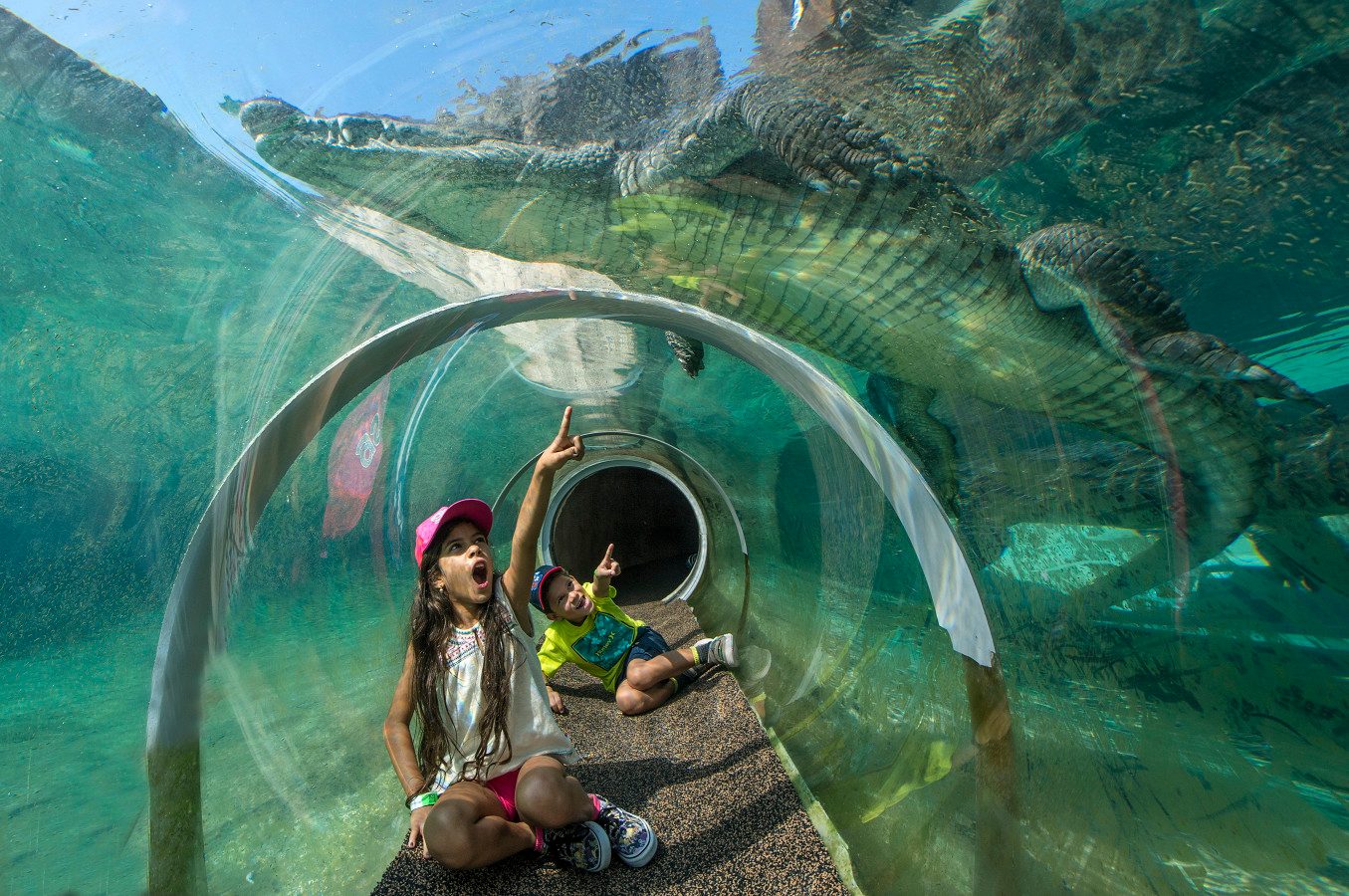
The Djerba Crocodile Farm anchors the twenty-three-hectare Djerba Explore Park complex, which includes the Lalla Hadria Museum and a reconstructed Berber village. Visitor pathways descend three meters below water level into reinforced glass corridors, offering eye-level observation of submerged hunting behaviors and territorial displays. Afternoon feeding sessions at 17:00 demonstrate the species' explosive strike mechanics, with handlers suspending whole fish over holding pools while narrating predator-prey dynamics in French and Arabic. Educational plaques detail the Nile crocodile's role in ancient Egyptian cosmology and its current IUCN status as a species of least concern, though localized populations face habitat loss across eleven African nations.
The farm's architecture mirrors traditional Djerban fortified granaries, with whitewashed perimeter walls and domed observation towers that regulate interior temperatures without mechanical cooling. Native date palms and tamarisk shrubs frame the basins, replicating riverine microhabitats while providing shade for visitors navigating the circuit. The largest specimens exceed four meters in length and inhabit the central lagoon, visible from an elevated boardwalk that extends sixty meters into the enclosure. Interpretive displays chronicle the 1990s translocation effort and ongoing collaborations with Tunisian universities studying reptilian thermoregulation in arid climates.
Entry to the crocodile farm includes access to the adjacent heritage village, where artisans demonstrate pottery-throwing techniques unchanged since the eleventh century. The combined ticket structure positions the attraction within a broader narrative of ecological and cultural preservation, drawing visitors interested in both natural history and Mediterranean folkways. The facility operates year-round, with feeding times adjusted seasonally to align with reptilian activity peaks during cooler months.
"Visitor pathways descend three meters below water level into reinforced glass corridors, offering eye-level observation of submerged hunting behaviors."
A step-by-step walkthrough of Djerba Crocodile Farm tickets — what you'll see, how long each stage takes, and the details that matter.
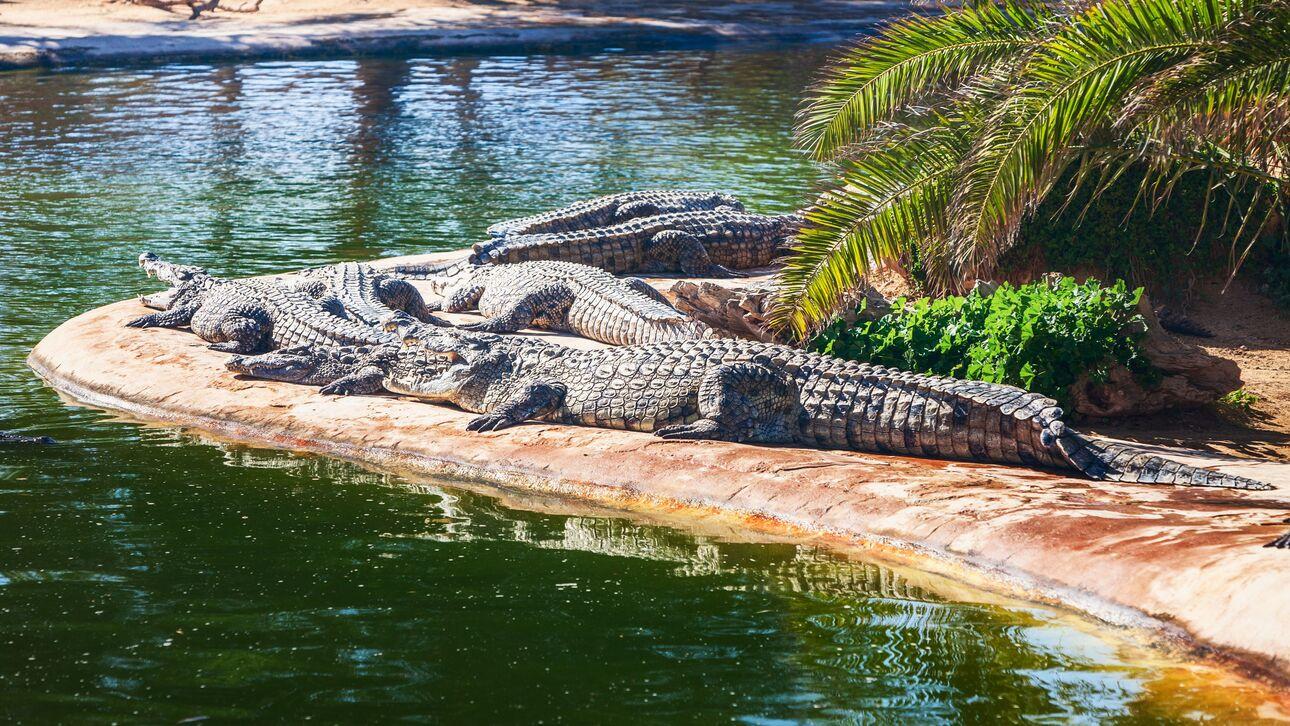
You enter through the whitewashed gatehouse at Djerba Explore Park and follow signs toward the crocodile sanctuary, where the first basin appears behind tamarisk hedges thirty meters from the entrance. A dozen subadult crocodiles bask motionless on concrete islands, their scales catching late-morning sun.
You descend wooden stairs into the glass tunnel, where the water shifts from opaque green to clear as your eyes adjust—a four-meter bull glides past at arm's length, jaws slightly parted.
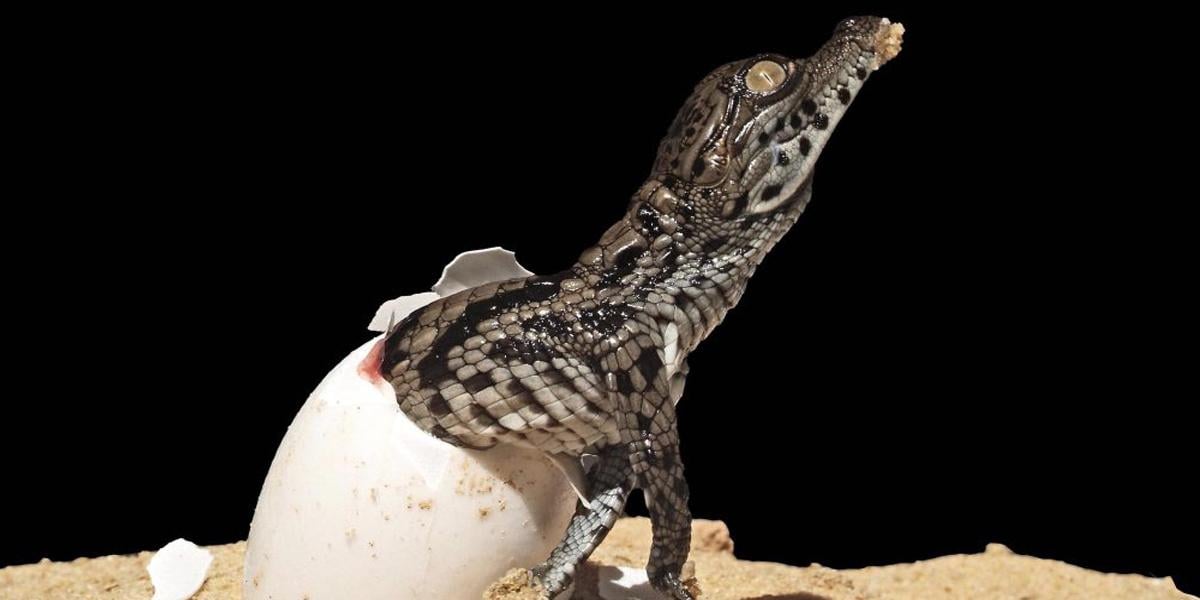
The circuit loops through twelve viewing stations, each overlooking a different age cohort. Hatchlings no longer than your forearm cluster under heat lamps in a nursery pool, while breeding females occupy deeper enclosures near the rear perimeter. Interpretive panels in French and English explain estivation cycles and jaw pressure metrics. You pause at the central lagoon overlook, where a wooden boardwalk extends over the largest holding area—eight mature crocodiles float like driftwood, eyes tracking egrets that wade along the shoreline.
At 16:45, you return to the main amphitheater as handlers prepare for the 17:00 feeding. They position buckets of mullet and sardines along the pool's edge, then use long poles to suspend fish above the water. The first strike breaks the surface with enough force to splash the front rows—scales, teeth, and water refract afternoon light in a single motion. The demonstration lasts twelve minutes. Afterward, you exit through the heritage village, where the ticket also grants access to pottery workshops and the Lalla Hadria Museum.
The park and the djerba crocodile farm are open daily from 09:00 to 17:30.
While not strictly required, purchasing djerba crocodile farm tickets online can save time on arrival.
Yes, the djerba crocodile farm is wheelchair accessible throughout most of the enclosure areas.
Small bags are permitted inside the djerba crocodile farm, though security may check them at the entrance.
The best arrival window is 09:00–16:00 to ensure you have time to see the exhibits before the 17:00 feeding session at the djerba crocodile farm.
There is no formal dress code, but modest, comfortable clothing is recommended for a djerba crocodile farm visit.
Yes, the park has several cafes and restaurants located in the village area outside the djerba crocodile farm entrance.
The djerba crocodile farm is easily reached by taxi or car, located at Route touristique de Midoun.
The djerba crocodile farm is an excellent family-friendly attraction with educational exhibits for all ages.
Cancellations are generally managed by the ticket provider; check your booking confirmation for specific rules regarding your djerba crocodile farm tickets.
A visit to the djerba crocodile farm is perfectly combined with the Lalla Hadria Museum and the heritage village located on the same site.